Who is Jelle Marble Runs: YouTube’s Marble Racing King
In the vast universe of YouTube, where gaming streams and makeup tutorials reign supreme, one Dutch creator carved out a completely unexpected niche that has captivated millions: professional marble racing. Behind this phenomenon stands Jelle Bakker, the creative genius of Jelle’s Marble Runs (JMR), who transformed a childhood hobby into a global sports-like spectacle that even caught ESPN’s attention. But who exactly is the man behind these mesmerizing marble races?
The Man Behind the Marbles
Jelle Bakker, a creator from the Netherlands, isn’t your typical YouTube star. With autism and a lifelong fascination with marbles, Jelle found his calling in creating intricate marble racing tracks, first as a personal passion, then as entertainment for the world.
Since childhood, Jelle displayed an extraordinary talent for designing complex marble runs, spending countless hours perfecting slopes, turns, and obstacles. His early experiments with how to build a marble run eventually evolved into professional-grade courses. What began as a soothing activity soon transformed into something much bigger when his brother, Dion Bakker, suggested sharing these creations online.
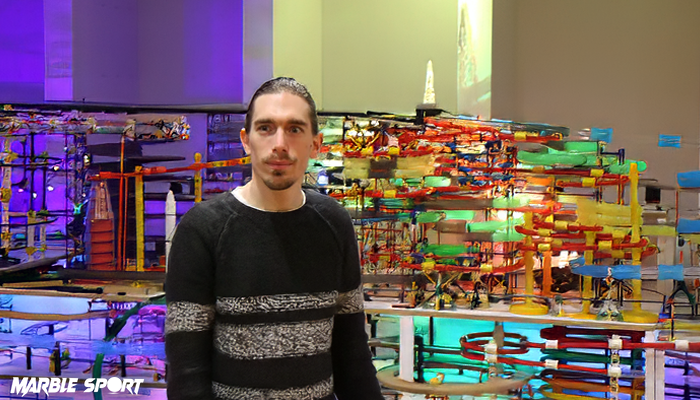
“I’ve been playing with marbles since I was 4 or 5 years old,” Jelle has mentioned in interviews. “I’ve always been fascinated by how they move, their colors, and the sounds they make when racing down tracks.”
From Hobby to YouTube Sensation
The Jelle’s Marble Runs channel started humbly in 2006, but it wasn’t until around 2016 that the channel exploded in popularity. Viewers were drawn to the surprisingly entertaining races, complete with professional-style commentary added by American collaborator Greg Woods.
What sets JMR apart from random marble videos is the incredible production value and the sports-like presentation. Jelle created distinct marble teams with names like the Savage Speeders, O’rangers, and Hazers. Each team has its own colors, backstories, and even dedicated fan bases that passionately root for their favorite marbles across different tournaments.
The channel’s flagship competition, the Marble League (formerly known as the MarbleLympics), features events that mirror real Olympic competitions – everything from marble sprint races to underwater challenges and team rallies. The attention to detail is astounding: tiny grandstands filled with “spectator” marbles, starting gates, photo finishes, and precision timing systems.
America’s Quarantine Sports Obsession
While JMR had a dedicated following for years, it was during the 2020 pandemic lockdowns that Jelle became a legitimate sports alternative for Americans starved of traditional sports content. With major leagues shut down, marble racing filled the competitive void in an unexpectedly satisfying way.
The surge in popularity caught the attention of mainstream media outlets. Suddenly, Jelle’s marble races were being featured on ESPN, HBO’s Last Week Tonight with John Oliver, and numerous news broadcasts across America. The New York Times and The Wall Street Journal published features about the phenomenon. Jelle Bakker had become America’s unlikely sports savior.
“When real sports went away, we found ourselves completely invested in whether the O’rangers would overtake the Savage Speeders,” said Mark, a fan from Boston. “My wife thought I was losing my mind screaming at marbles rolling down a track, but now she’s just as hooked as I am.”
This newfound popularity led to a surge in people wondering where to buy marble run sets to try creating their own courses at home, as families looked for engaging activities during lockdown.
More Than Just Rolling Marbles
What many new fans didn’t initially realize is the immense effort behind each JMR video. A single Marble League event can take weeks to produce, with Jelle spending 8-10 hours daily crafting tracks with meticulous precision.
The operation has grown from just Jelle to a small team. His brother Dion handles the business side, while a creative team develops storylines and marketing. Commentary by Greg Woods adds legitimate sports-announcer energy to the proceedings. There’s even a statistics team that tracks performance data across events, creating a deep lore that rivals actual sports leagues.
Anton Weber, known online as Mellacus, joined as a producer and has helped grow the brand internationally. “What Jelle creates is art,” Weber has stated. “His attention to detail and the creativity in his track designs are unmatched. He’s a true marble mastermind.”
Some of Jelle’s most creative concepts involve figuring out how to make the slowest marble run possible while keeping viewers engaged – a counterintuitive approach that has yielded some of the channel’s most nail-biting finishes.
Building a Marble Empire
The JMR universe has expanded well beyond simple races. The channel now features:
- Marble League: The flagship annual tournament with Olympic-style events
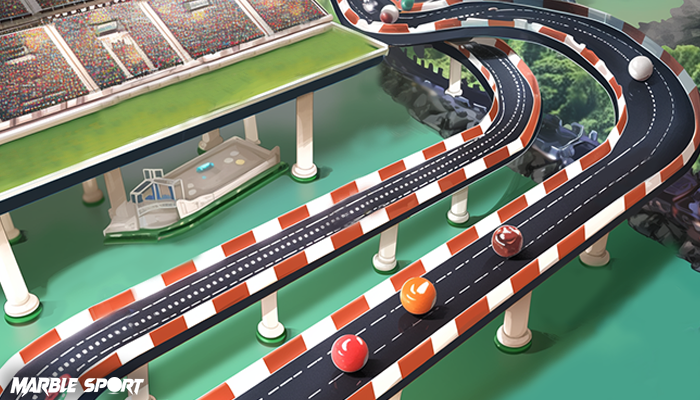
- Marbula One: A Formula 1-inspired racing series on technical circuits
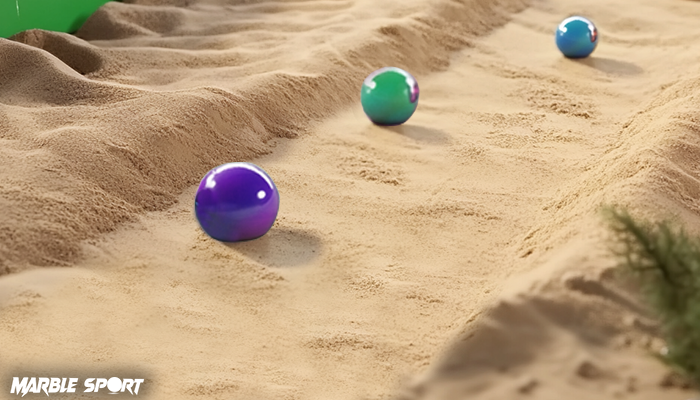
- Marble Rally: Sand-based races featuring individual marbles
- Marbula E: An eco-friendly racing series sponsored by Envision Virgin Racing
- Marble Champions League: Team-based tournament with elimination brackets
This diversification has built a year-round content calendar that keeps fans engaged season after season. The channel boasts over 1.5 million subscribers, with videos regularly garnering hundreds of thousands of views.
Perhaps most impressively, Jelle has secured legitimate sponsorships. Among the most notable was a partnership with Formula E team Envision Virgin Racing, who sponsored the Marbula E series, bringing legitimate motorsport attention to marble racing.
The Future of Marble Racing
After a brief hiatus in 2022 to address health concerns, Jelle returned with even more ambitious plans for his marble empire. The production quality continues to improve, with custom-built arenas, more sophisticated filming techniques, and enhanced graphics.
The fanbase remains passionately engaged, creating marble fantasy leagues, merchandise, and fan art. Some fans even travel to meet-up events centered around marble racing viewing parties.
“What makes JMR special is the community,” says longtime fan Rachel from Chicago. “We’re all in on the joke that these are just marbles, but also completely serious about our team loyalty. It’s both ridiculous and amazing.”
For Jelle Bakker, what began as a soothing hobby connected to his autism has transformed into a global phenomenon that brings joy to millions. Through creativity, persistence, and undeniable talent, this Dutch marble enthusiast has rolled his way into YouTube history, proving that sometimes the most unexpected passions can lead to extraordinary results.
In the words of JMR’s tagline: “These aren’t just marbles, this is marble racing.” And Jelle Bakker isn’t just a YouTube creator – he’s the undisputed king of a marble racing empire that shows no signs of slowing down.
FAQ about who is Jelle marble runs
Who is the commentator for Jelle’s Marble Runs?
Greg Woods is the voice behind the races, bringing excitement and realism with his sports-style narration.
What teams are in Jelle’s Marble Runs?
Teams like Savage Speeders, O’rangers, and Raspberry Racers are fan favorites with loyal followings.
When did Jelle's Marble Runs start?
Jelle started uploading marble machine content in 2006, but racing began gaining traction in 2015.
What marble track does Jelle use?
He uses custom-designed courses, often made of sand, plastic tracks, or Quercetti pieces.